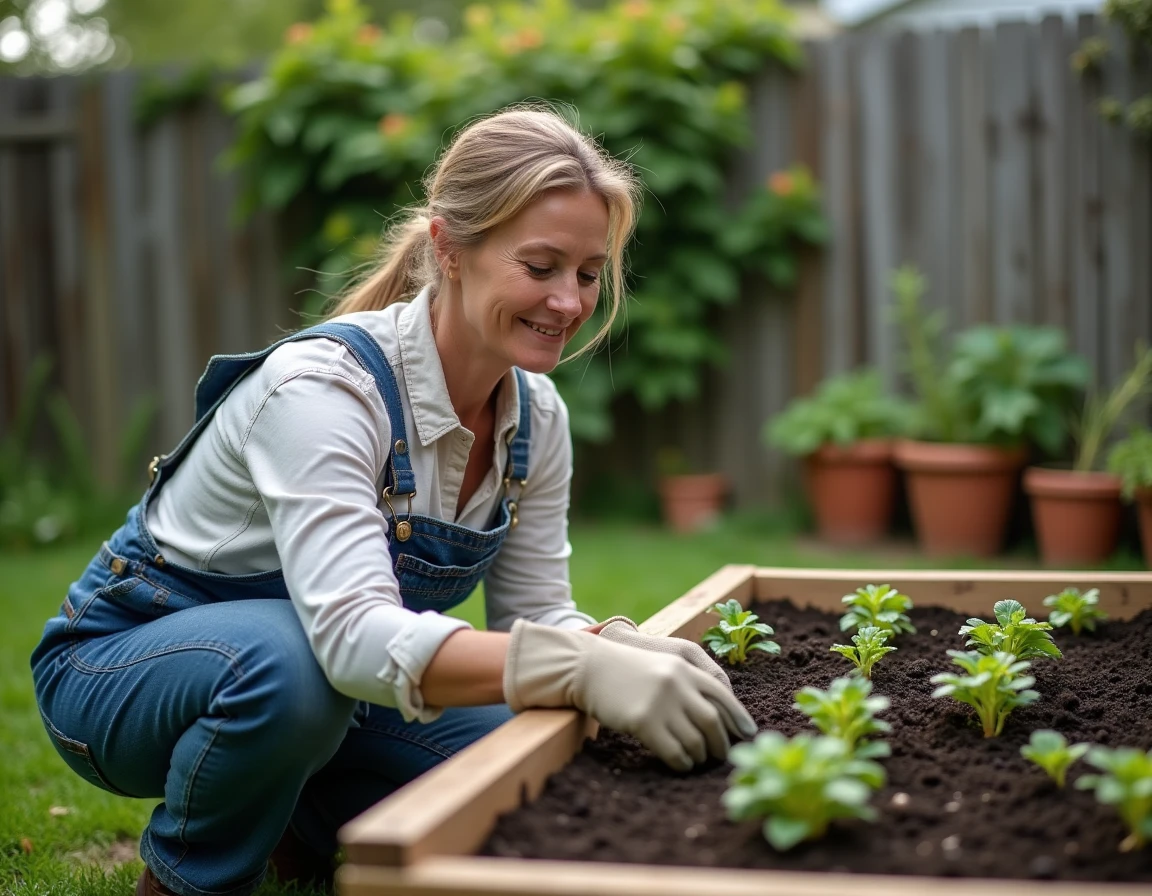
A living soil conditions everything else. Before choosing varieties or planning flower beds, it is the structure of the substrate, its retention capacity, and its biological activity that determine the success of landscaping in the long term.
Soil structure and microbial life: the foundation of a productive garden
We recommend conducting a texture test before any planting. Taking a handful of moist soil and rolling it between your fingers allows you to quickly distinguish clay soil (sticky, plastic) from loamy soil (silky) or sandy soil (granular). This information dictates the choice of amendments and the frequency of watering.
A compacted soil suffocates the roots and promotes runoff. Aeration, preferred over deep digging, loosens the soil without inverting the horizons or destroying the mycorrhizal network. Preserving soil fauna ensures lasting fertility.
The addition of fragmented organic matter (mature compost, wood chip mulch) feeds the bacteria and fungi that make nutrients available. In clay soil, compost also improves drainage. In sandy soil, it increases water retention. The resources available on the garden on Univers du Bricolage detail these amendment techniques according to substrate types.

Water management in the garden facing drought orders
Watering restrictions are multiplying in France. More and more departments are issuing drought orders as early as spring, limiting or prohibiting the watering of private gardens. We observe that this regulatory reality profoundly changes the way outdoor spaces are designed.
Reducing dependence on drinking water
Rainwater harvesting is becoming a structural investment. An underground or above-ground tank, connected to gutters, covers a significant portion of watering needs between April and September. The sizing depends on the area of the collecting roof and the volume of planting to be irrigated.
Organic mulching (straw, dead leaves, bark) significantly reduces evaporation. We recommend a layer of at least five centimeters, renewed twice a year. This mulch also limits the emergence of weeds and nourishes the soil as it decomposes.
Adapting plants to water constraints
Planting species with low water needs is no longer an aesthetic option; it is a technical necessity. Lavenders, sages, yarrow, ornamental grasses, and sedums thrive with very limited inputs once established.
- Group plants by water needs (hydrozoning) to target watering and avoid waste in areas that do not need it.
- Favor programmed drip irrigation in the evening, which reduces evaporation and targets the root zone without wetting the foliage.
- Gradually replace ornamental grass with perennial ground covers (thyme, dichondra, dwarf clover) that withstand drought and require little mowing.
Replacing intensive lawns: ground covers and flower meadows
Short grass mowed every week is the most water, fuel, and time-consuming aspect. Feedback from ADEME and the French Office for Biodiversity confirms a notable decrease in the use of intensive lawns among individuals, in favor of flower meadows and draining gravel.
A flower meadow sown with a mix suited to the local soil (low grasses, clovers, yarrow, poppies) is mowed only two to three times a year. It attracts pollinators and creates a dense cover that limits erosion.
For high-traffic areas, dwarf clover withstands moderate trampling, fixes atmospheric nitrogen, and stays green longer than ryegrass during dry periods. At the edge of a flower bed, creeping thyme or sedum form dense mats that require no mowing.
Maintenance without phytosanitary products: concrete techniques
Since the generalization of zero pesticide use for individuals, mechanical and biological methods have taken over. Thermal weeding (flame or steam) remains effective on paths and pavements. On flower beds, thick mulching makes chemical weeding unnecessary.
Pest management through beneficials
A garden that welcomes beneficials mechanically reduces pest pressure. Ladybugs, lacewings, and hoverflies consume massive amounts of aphids. Installing an insect hotel is only beneficial if the environment also offers food resources: diversified hedges, flower strips, piles of dead wood.
- Pair repellent plants with sensitive crops: marigold near tomatoes limits nematodes, basil repels certain flying insects.
- Spray plant extracts (nettle for foliar strengthening, horsetail for fungal prevention) preventively rather than curatively.
- Practice crop rotation in the vegetable garden to break pest cycles and avoid depleting the soil of specific nutrients.

Seasonal planning of plantings and the vegetable garden
A planting calendar aligned with the last local frosts avoids unnecessary losses. We recommend noting each year the date of the last observed frost: this data varies greatly from one area to another, even within the same municipality.
Direct sowing in the ground in spring succeeds better on soil that is already warmed. Placing a forcing cover two weeks before sowing accelerates the warming of the substrate by a few degrees. For trees and shrubs, autumn planting remains preferable: the root system establishes during winter, making the plant more autonomous by the first summer.
In the vegetable garden, companion planting (tomato-basil, carrot-leek, squash-corn-bean) optimizes space, limits pest pressure, and improves yields. These traditional associations rely on root complementarities and documented repellent effects.
Designing a sustainable garden is envisioned as a system: the soil nourishes the plants, the plants protect the soil, and the beneficials regulate the pests. Every technical choice, from the type of mulch to variety selection, reinforces or weakens this loop. A garden that operates on a short circuit of energy and matter requires fewer interventions each year.