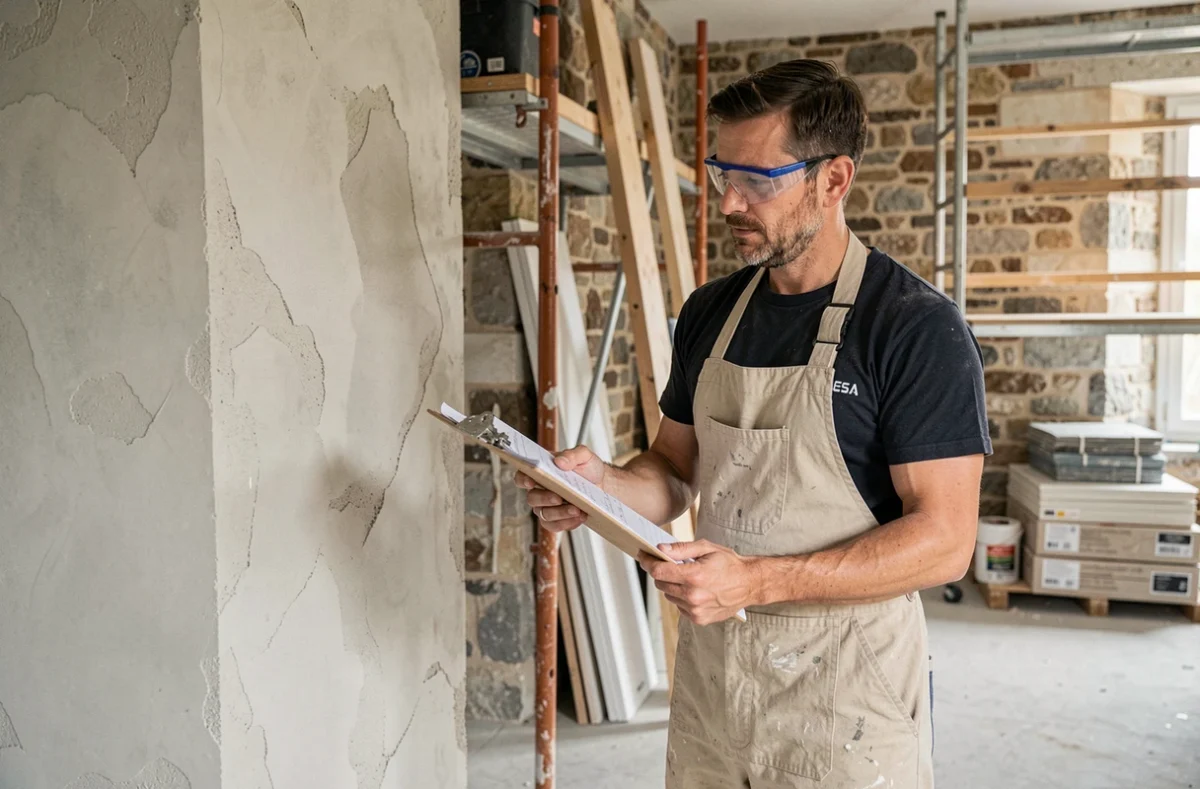
Renovating a property in Rennes rarely starts with the choice of paint color. The first obstacle is often an unforeseen constraint: a planning regulation, a diagnostic that needs to be redone, or an overlooked expense. Successfully completing renovation work in Rennes requires addressing these points in advance, even before contacting a tradesperson.
Heritage Constraints in Rennes: Check Before You Quote
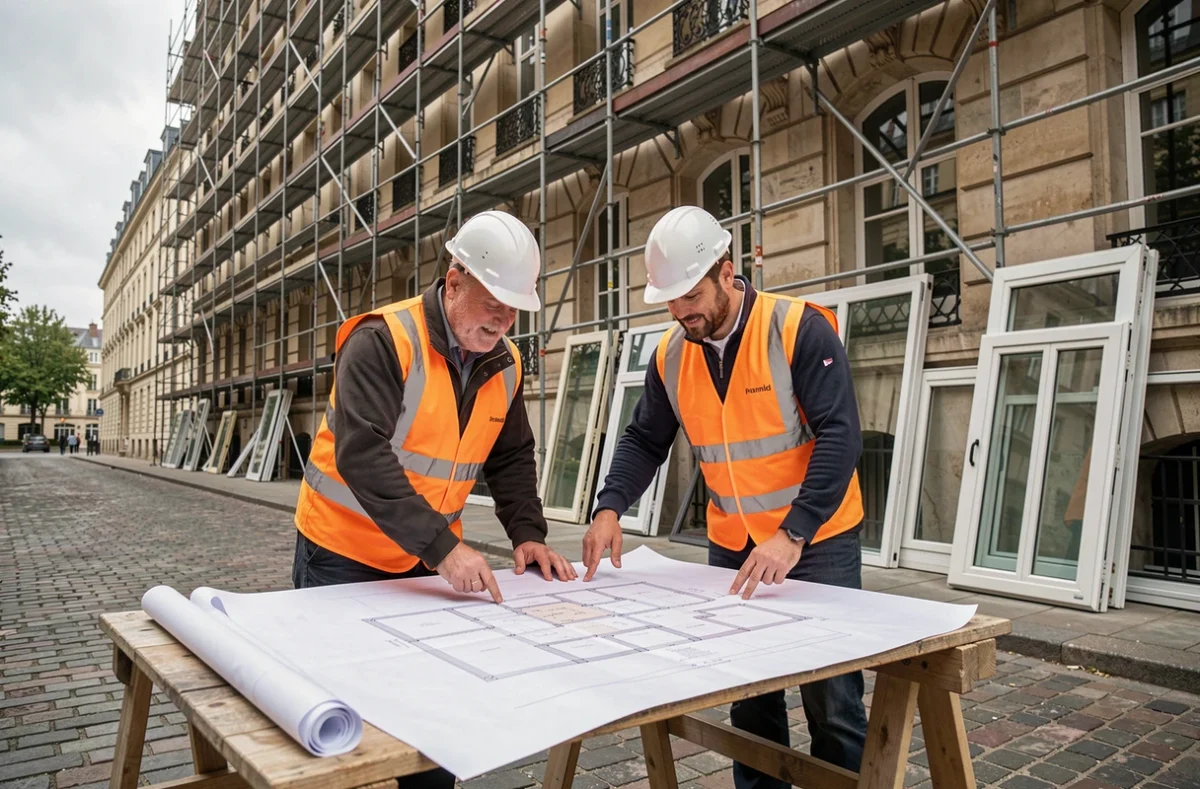
Have you spotted an apartment in an old town center with beautiful windows to replace? Before requesting a quote, check if the address is located in a protected area. In Rennes, facade work and the replacement of joinery may require the opinion of the Architect of the Buildings of France.
In practical terms, this means that materials, profiles, and colors are not freely chosen. A standard white PVC may be rejected in favor of painted wood or aluminum in a specific color. The additional cost is not negligible, and the review period can extend the timeline by several weeks.
In a co-ownership, an additional layer is added: the common rules of the building. Even outside protected areas, the co-ownership regulations may impose constraints on shutters, railings, or external insulation. Starting renovation work with Diag Immo Rennes allows you to identify these constraints early in the diagnostic phase, before the budget is set.
The reflex to adopt: consult the PLU of Rennes Métropole and, if necessary, submit a prior declaration of work. This free administrative document avoids unpleasant surprises during the project.

Collective DPE and Individual DPE: Two Distinct Diagnostics in Co-Ownership
Why does this point deserve your attention? Because the confusion between collective DPE and individual DPE can skew the entire energy renovation strategy of an apartment.
The collective DPE assesses the performance of the building as a whole. It takes into account the building envelope, communal heating, and general ventilation. The individual DPE, on the other hand, applies to the unit you occupy or rent. The collective DPE does not replace the individual DPE required during a sale or rental.
A common trap after collective work (insulating facade, replacement of communal boiler): the individual label is not automatically updated. If you have financed a share of insulation work, your individual DPE will still display the old rating until a new diagnostic has been carried out.
When to Redo the Individual DPE
After any intervention that modifies the insulation, heating system, or ventilation of the property, obtaining a new DPE allows you to highlight the gains. For a rental project, this is even more strategic as thermal sieves are subject to increasing rental restrictions.
Insulation and Ventilation: The Order of Work Matters
Insulation is often the first item mentioned when discussing energy renovation. Insulating the attic remains the most cost-effective priority, as heat loss through the roof accounts for the largest share of heat loss in a house.
However, insulating without addressing ventilation creates a problem: a better-insulated property becomes more airtight. If air no longer circulates properly, humidity accumulates, mold appears, and comfort deteriorates instead of improving.
- Check the condition of the existing ventilation before insulating. In an old apartment without mechanical ventilation, the installation of mechanical ventilation must precede or accompany insulation.
- Address thermal bridges at wall-floor junctions and around joinery, not just large surfaces.
- Adapt the type of insulation to the building: a stone wall breathes differently than a concrete block wall. An unsuitable insulation can trap moisture in the masonry.
This overall logic, simple in essence, is often overlooked when work is carried out item by item without coordination.
Renovation Budget in Rennes: Underestimated Items
The cost of materials and labor constitutes the visible part of the budget. The invisible items can represent a significant portion of the final bill.
Diagnostics and Preliminary Studies
An asbestos diagnosis before work is mandatory for buildings constructed before 1997. In the presence of asbestos, asbestos removal increases the budget and extends the project timeline. Additionally, there is the lead diagnosis for homes built before 1949, which are common in the center of Rennes.
Structural Surprises
Behind a false ceiling or under a floor covering, one may sometimes discover a sagging floor, outdated plumbing, or an electrical network that does not meet standards. Allowing a margin in the initial budget absorbs these surprises without halting the project.
A frequently forgotten item: temporary relocation. For heavy renovations (electrical rewiring, heating replacement, complete internal insulation), the property may be uninhabitable for several weeks.
Financial Aid for Renovating in Rennes: What Remains Accessible
The landscape of aid is constantly evolving. Some programs have been suspended or refocused. Among the mechanisms that remain available for a renovation project:
- Energy savings certificates (CEE), which can be combined with other programs and provided by energy suppliers.
- The zero-interest eco-loan (éco-PTZ), which finances energy renovation work without interest.
- The ecoTravo program from Rennes Métropole, which offers free and neutral support for preparing aid applications and prioritizing interventions.
Before signing a quote, checking the eligibility of the property and the RGE qualification of the tradesperson is crucial for accessing these aids. A non-RGE certified tradesperson closes the door to most public funding.
Renovating a property in Rennes involves technical, administrative, and financial decisions that follow one another. Every step overlooked in advance turns into additional costs or delays once the project is underway. Identifying the specific constraints of the address, coordinating insulation and ventilation, anticipating mandatory diagnostics: these simple reflexes separate a well-managed project from a burdensome construction site.