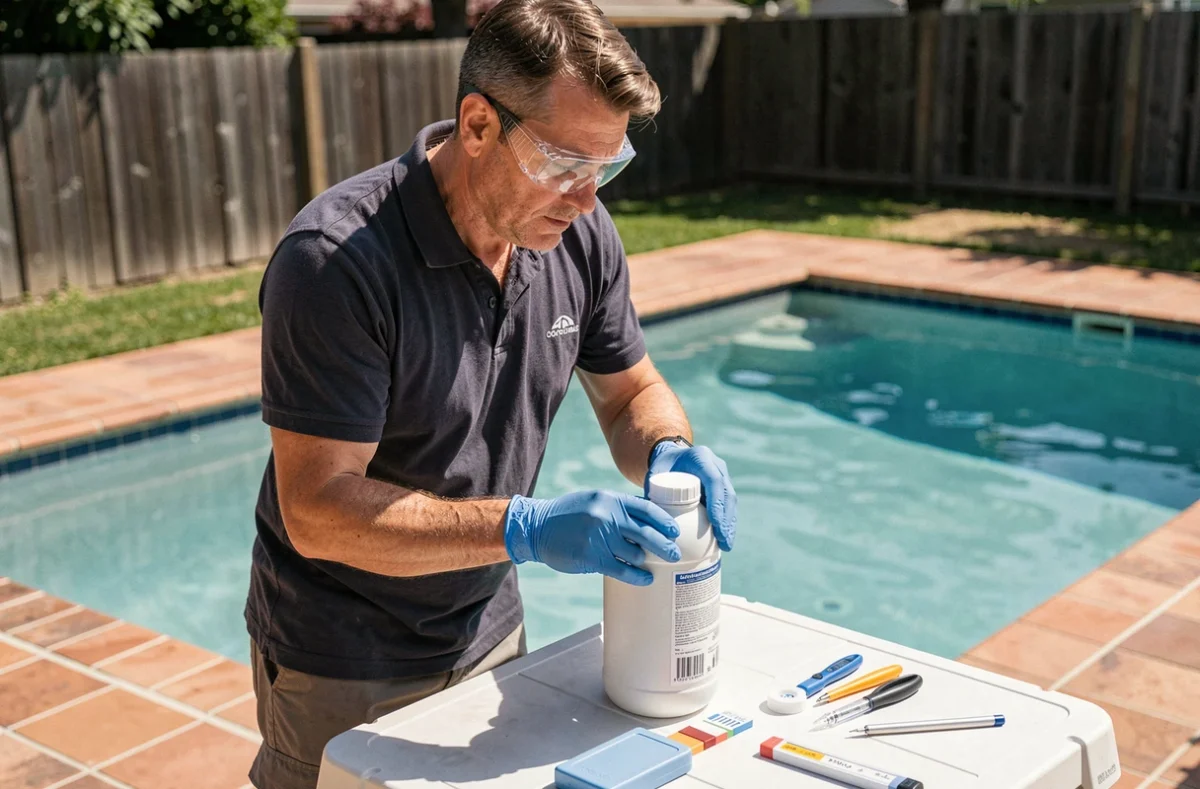
You add a little product to the pool to lower the pH, and everything seems sorted. The problem is that the sulfuric acid used in pools is no harmless pH adjuster. It is a strong acid classified as hazardous under the CLP Regulation, and it can cause severe skin burns and irreversible eye damage. Understanding its actual effects on the body and pool equipment can help prevent accidents that happen every season.
Chemical reaction in the pool: what really happens when you pour in the acid
Sulfuric acid releases hydrogen ions when it comes into contact with water. This reaction is exothermic, meaning it produces heat. If you pour in the product too quickly or in too large a quantity, the local water temperature rises sharply.
This heat can cause splashes and irritating fumes. Near the water’s surface, these fumes can reach the handler’s respiratory tract and eyes within seconds.
Another less obvious hazard: mixing a strong acid with a chlorinated product releases chlorine gas. This gas can cause serious respiratory problems. The Normandy Regional Health Agency (ARS) reminds pool owners that storing acidic and chlorinated products separately is a basic precaution to prevent explosions or fires. A container of sulfuric acid placed next to a bucket of chlorine granules in a poorly ventilated room is enough to create a dangerous situation.
An article detailing the dangers of sulfuric acid in swimming pools describes the burn mechanisms and chemical reactions involved in handling it.
Sulfuric acid and the skin, eyes and lungs: the real health risks
The INRS toxicological data sheet classifies sulfuric acid with the H314 hazard statement: “Causes severe skin burns and eye damage.” This is not just administrative wording. Here’s what it means in practice.
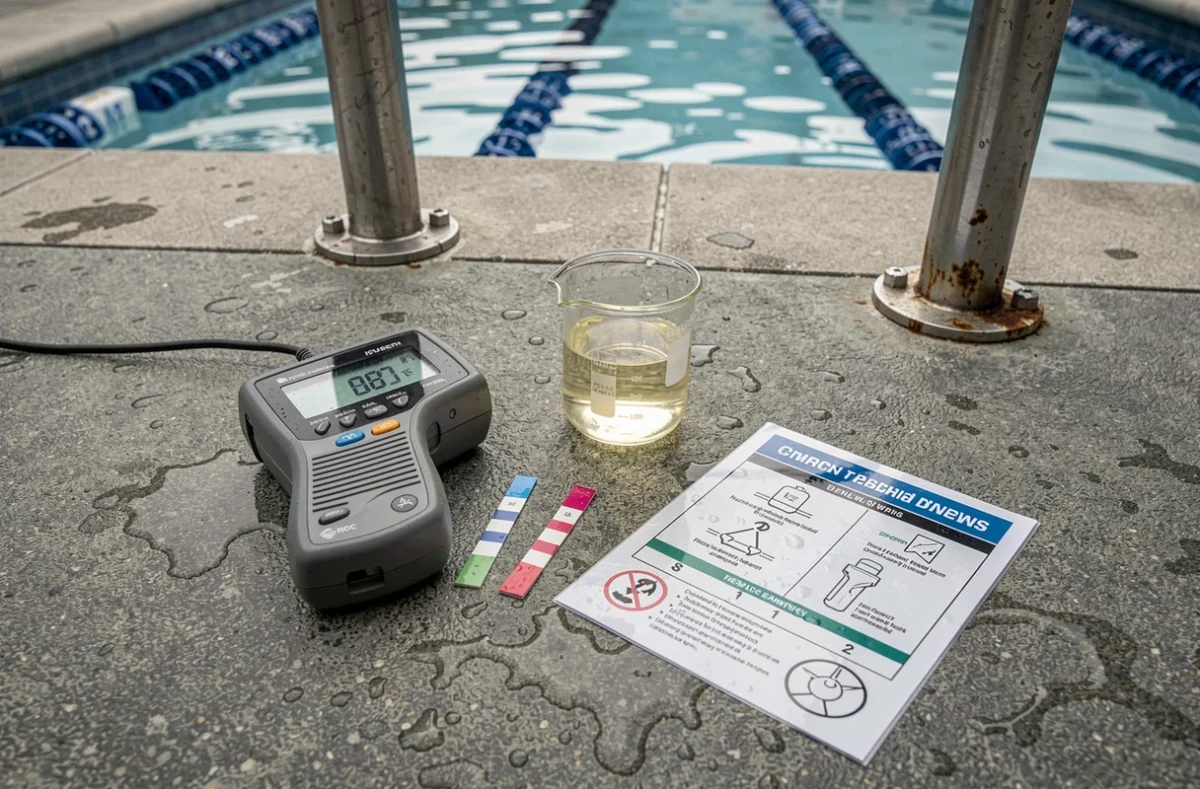
- Skin contact: even a few drops can cause a chemical burn. Pain does not always appear immediately, delaying rinsing and making the injury worse.
- Splashes in the eyes: the Belgian Poison Centre recommends rinsing thoroughly with water for at least fifteen minutes, then going to the emergency department. Corneal damage can be permanent if rinsing does not last long enough.
- Inhaling fumes: concentrated sulfuric acid has a low vapour pressure at room temperature, but this increases with heat. In summer, an overheated equipment room or pouring the product too quickly into a pool exposed to the sun can release fumes that irritate the bronchial tubes.
- Accidental ingestion: rare in adults, this risk mainly affects children. A container that is not properly closed or is stored within their reach poses a real danger.
The Belgian Poison Centre (070 245 245) should be your first point of contact in the event of an accident involving a pool maintenance product.
Damage sulfuric acid can cause to pool equipment
Burns are not the only concern. Sulfuric acid also attacks the materials in your pool system, sometimes in ways that remain invisible for months.
Elastomer seals and metal fittings are the first to be affected. A one-off overdose can cause the pH to drop well below the acceptable range. At this level of acidity, corrosion accelerates on the metal parts of the pump, filter and heat exchanger.
The liner is also at risk. A pH that is too low for too long weakens the PVC coating, causing it to lose flexibility and crack. Replacing a liner costs far more than using the right amount of pH adjuster.
Have you noticed white deposits around the return jets? This is often a sign of a prolonged acid imbalance. Water that is too acidic dissolves the limescale in seals and concrete, then deposits it elsewhere when the pH rises again. This cycle gradually damages the pool structure.
Handling precautions and alternatives to liquid pH Minus
Sulfuric acid is not prohibited for private pool owners, but handling it requires care. Operators of public pools must also keep a health log documenting every treatment and check, in accordance with ARS requirements.
For home use, a few simple rules can greatly reduce the risk:
- Wear sealed safety goggles and acid-resistant gloves (not ordinary household gloves).
- Always pour the acid into the water, never the other way around, to limit splashes caused by the exothermic reaction.
- Store the container in a ventilated area, away from chlorinated products and out of children’s reach.
- Never pour acid directly into the skimmer, as the local concentration would be too high and could damage internal components.
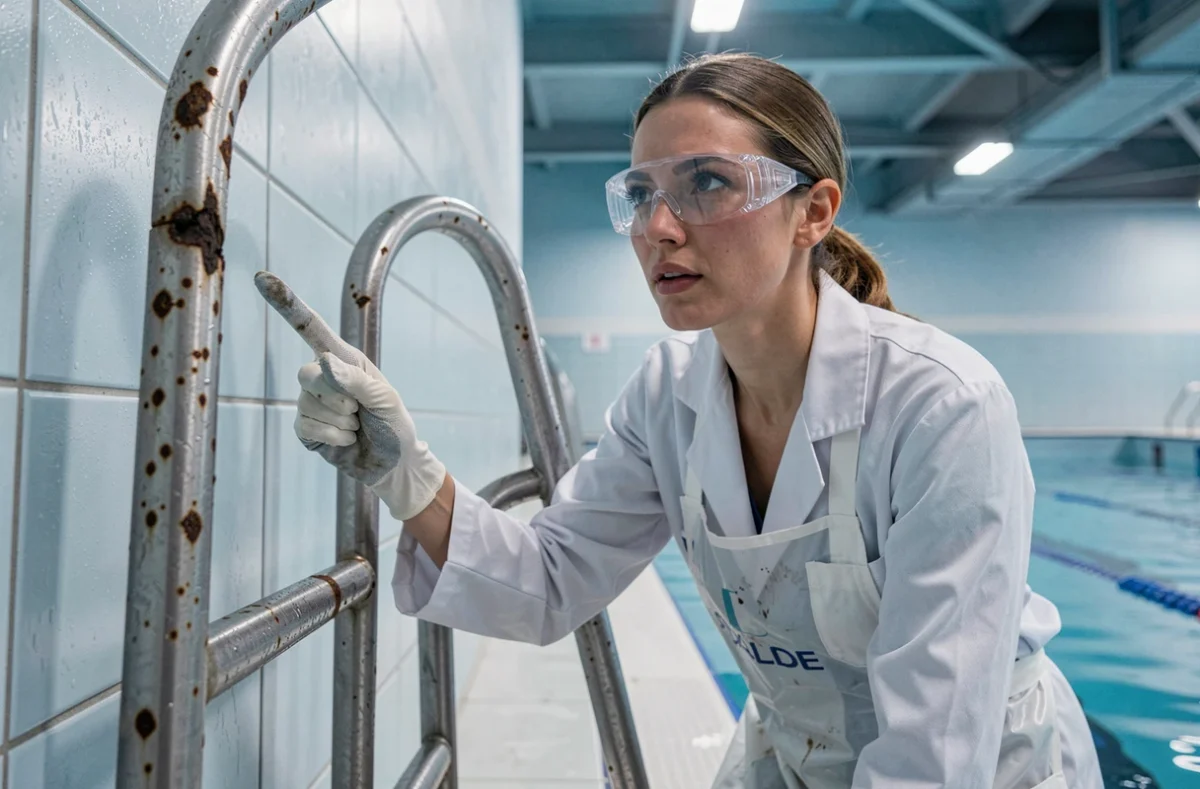
There are alternatives for lowering pH without handling a strong acid. Sodium bisulfate (pH Minus in powder or granule form) is still an acid, but as a solid it is less likely to splash and is easier to measure. Automatic pH regulators inject the product in a controlled way, eliminating the risk of human error leading to an overdose.
An automatic regulator paired with a reliable pH probe eliminates almost all handling accidents. The investment also pays off by reducing product waste and protecting your equipment.
Sulfuric acid is effective for correcting a high pH, but its benefits outweigh the risks only when dosing, storage and protective measures are handled correctly. For most pool owners, a solid pH adjuster or an automated system delivers the same results without exposing skin, eyes or equipment to a product classified as corrosive.