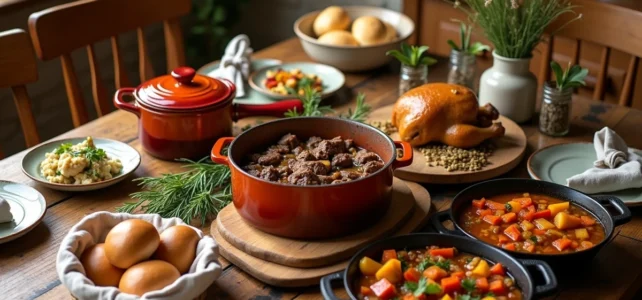
When hosting a Sunday lunch with a vegetarian stepson, a gluten-intolerant niece, and children who only swear by mac and cheese, the temptation to prepare three different dishes is strong. However, it is possible to cook a single friendly meal that satisfies everyone, provided you choose adaptable recipes from the start. The key is communal recipes with a common base, where everyone personalizes their plate without spending the whole day in the kitchen.
Adaptable communal recipes for families with dietary restrictions
The most effective strategy for delighting the whole family without multiplying versions is based on a simple principle: a neutral base, separate toppings. You prepare a base compatible with the most restrictive diet, then add toppings separately.
A lire aussi : The secret to easily reaching 5000 steps a day and burning calories!
The vegetable gratin illustrates this logic well. You create a base of zucchini, eggplant, and potatoes, bound with olive oil and vegetable broth. For cheese lovers, you grate some comté or parmesan on their portion before it goes into the oven. For those who are lactose intolerant, malted yeast provides a similar flavor without dairy products.
“Topping bar” dishes work even better. A large bowl of rice or gluten-free pasta (made from red lentils, for example) placed in the center of the table, surrounded by bowls: sautéed mushrooms in oil, shredded chicken, homemade tomato sauce, caramelized onion, green salad. Everyone composes their plate. There are indeed many variations of this type of meal on foodiesandfamily.fr, with combinations that go off the beaten path.
A lire également : Creative Ideas and DIY Tips for Home Crafting

One-pot family meals: less dishwashing, more flavor
Feedback from families who cook daily converges on one point: the one-pot reduces preparation time and energy consumption. One pot, one heat source, and a result that gains in flavor because everything cooks together.
The meal soup is the most underrated version. Not the sad, liquid soup of Wednesday nights, but a thick soup, almost a stew.
- Chickpea soup with mild spices and oven-toasted croutons: vegetarian and gluten-free if using rice bread for the croutons
- One-pot penne with chicken, cherry tomatoes, and mushrooms: cooking the pasta directly in the sauce concentrates the flavors and avoids an extra pot
- Green lentil stew with carrots and onion, served with rice: complete plant-based protein, nourishing, and children accept lentils more easily when they are tender
The “Food Trends 2026” report from the Food Consumption Observatory confirms a rise in hybrid recipes mixing plant and animal proteins. In practice, this results in a beef and carrot dish where half the meat is replaced by red beans. The result is lighter, costs decrease, and vegetarian guests can help themselves while avoiding the meat pieces grouped on one side of the dish.
Adapting oven cooking for large gatherings
The oven remains the ally of family meals because it works on its own. You put it in the oven, clear the countertop, and take care of the kids. A dish in the oven for eight people requires the same effort as for four, you just need a larger dish.
Lasagna remains a classic, but it can be made accessible to everyone. Gluten-free lasagna sheets are available in supermarkets. The béchamel can be made with rice flour and oat milk without any notable loss of texture, although feedback varies by brand.
For the filling, a layer of grilled vegetables (eggplant, peppers) replaces the meat on half of the dish, marked with a small toothpick flag so everyone can identify it.
Weekend communal meal: Mediterranean recipes that please everyone
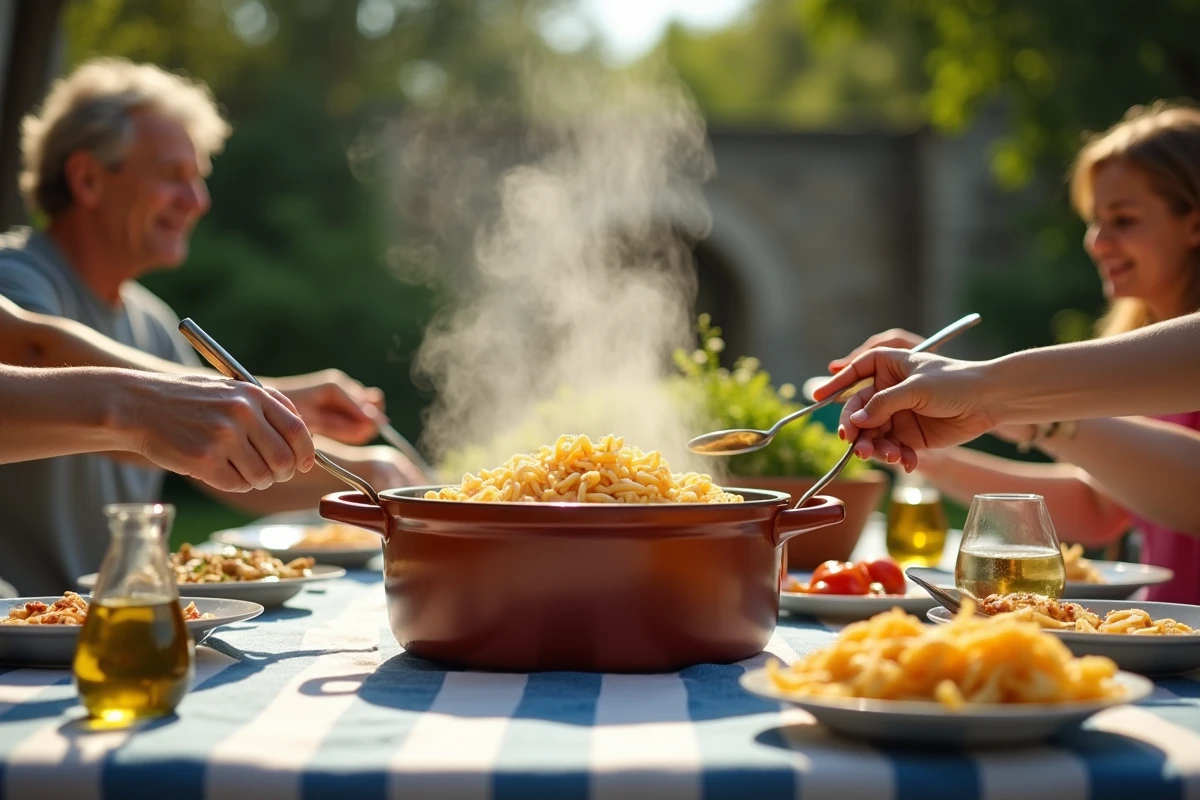
The “Family Eating Habits 2026” study by IFOP for Interfel points out an interesting fact: Mediterranean-inspired recipes receive higher family satisfaction scores during long weekends than classic French dishes. The likely explanation lies in the variety of small dishes placed on the table, allowing everyone to nibble according to their tastes.
The mezze principle adapted for families works remarkably well. You prepare five or six simple dishes, arranged in the center of the table.
- Homemade hummus (chickpeas, tahini, lemon, olive oil): naturally vegetarian, gluten-free, ready in a few minutes in a blender
- Oven-grilled vegetables (peppers, zucchini, red onion) drizzled with olive oil and thyme
- Beef or lamb meatballs with herbs for carnivores, baked on the same tray as the vegetables
- Tomato, cucumber, and feta salad (or without feta for lactose intolerant)
- Pita bread or buckwheat pancakes according to everyone’s restrictions
This meal format removes the notion of a “main dish” and the pressure that comes with it. No one feels excluded because everyone shares from the same bowls.
Stress-free shared dessert
The banana bread with plant-based yogurt and dark chocolate chips ticks all the boxes: quick preparation, compatible with most restrictions if using rice flour and soy yogurt, and the kids devour it warm right out of the oven. It is cut directly in the mold, placed on the table with a knife.
The fresh seasonal fruit salad is also a safe bet, especially when prepared with the kids. Cutting strawberries and kiwis keeps little hands busy while the main dish simmers.
Cooking for a family with varied tastes and constraints does not require becoming a caterer. Just think “common base, visible options” and favor formats where everyone serves themselves. Ultimately, the friendly meal begins when we stop trying to control every plate and let the table do its work.